Objects and Environment Become Co-Learners
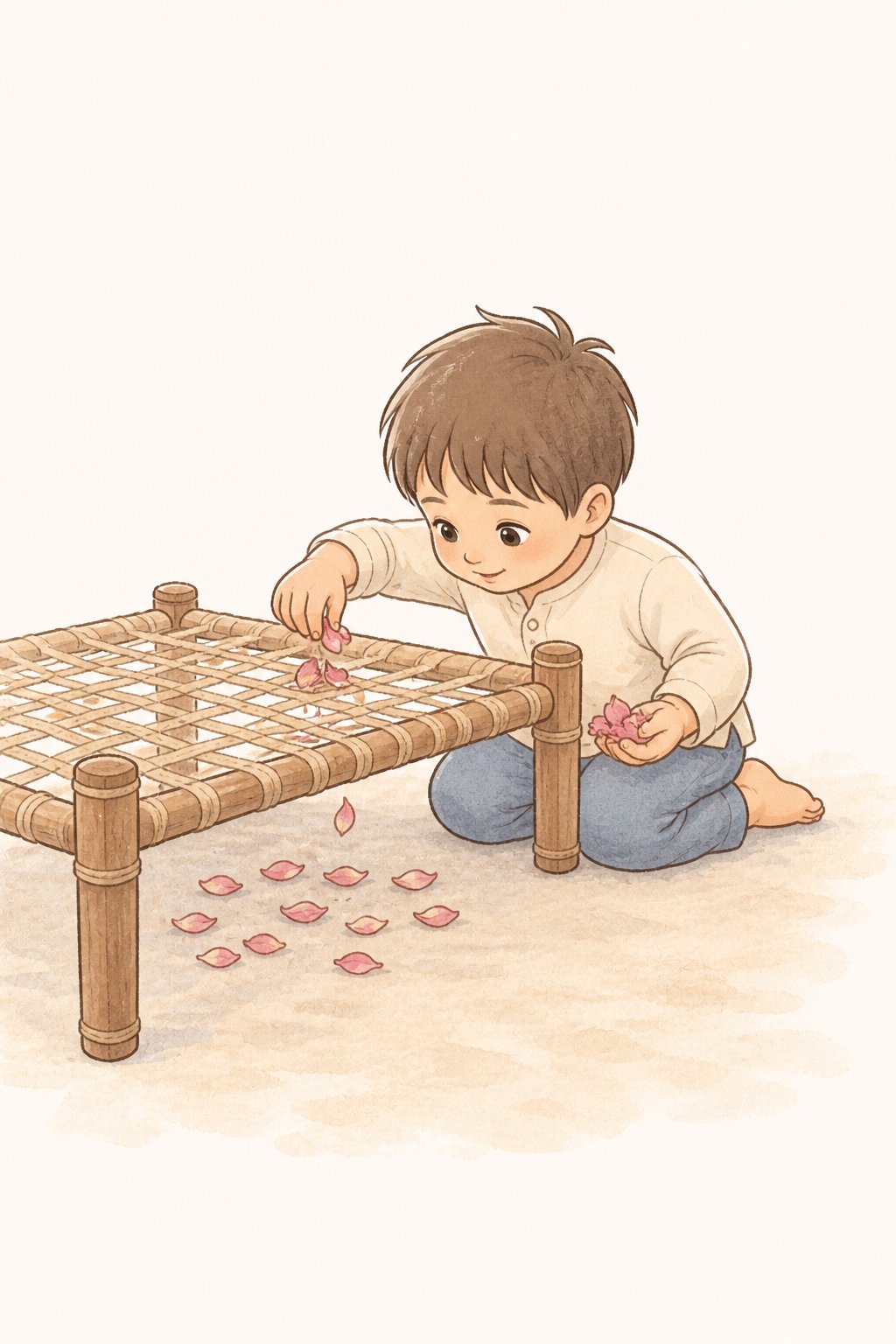
Children's play is often shaped in dialogue with the objects and environment around them. As the learner's attention zeroes in on specific materials, a dialogue begins between the living human and the seemingly inanimate object lending the material a sense of animation and aliveness. In this dialogue between the two, inquiry and learning begins to take shape.
Materials and the environment therefore are rarely passive participants in the learning process. Their material nature - their weight, texture, size, colour, resistance, or flexibility, shape what actions are possible and what ideas emerge. Similarly, the environment too influences learning through its openness or enclosure, its quietness or bustle.
Research in cognitive science suggests that thinking is frequently distributed across people, objects, and environments. Learning, therefore, is not contained within the learner alone. When learners engage with materials, the objects themselves become part of the thinking process. Open-ended materials are especially powerful in this regard because they do not dictate a fixed outcome. They assume shape and significance as co-learners within the learner's learning process.
[Story placeholder - Add observational vignette here]