The Observation
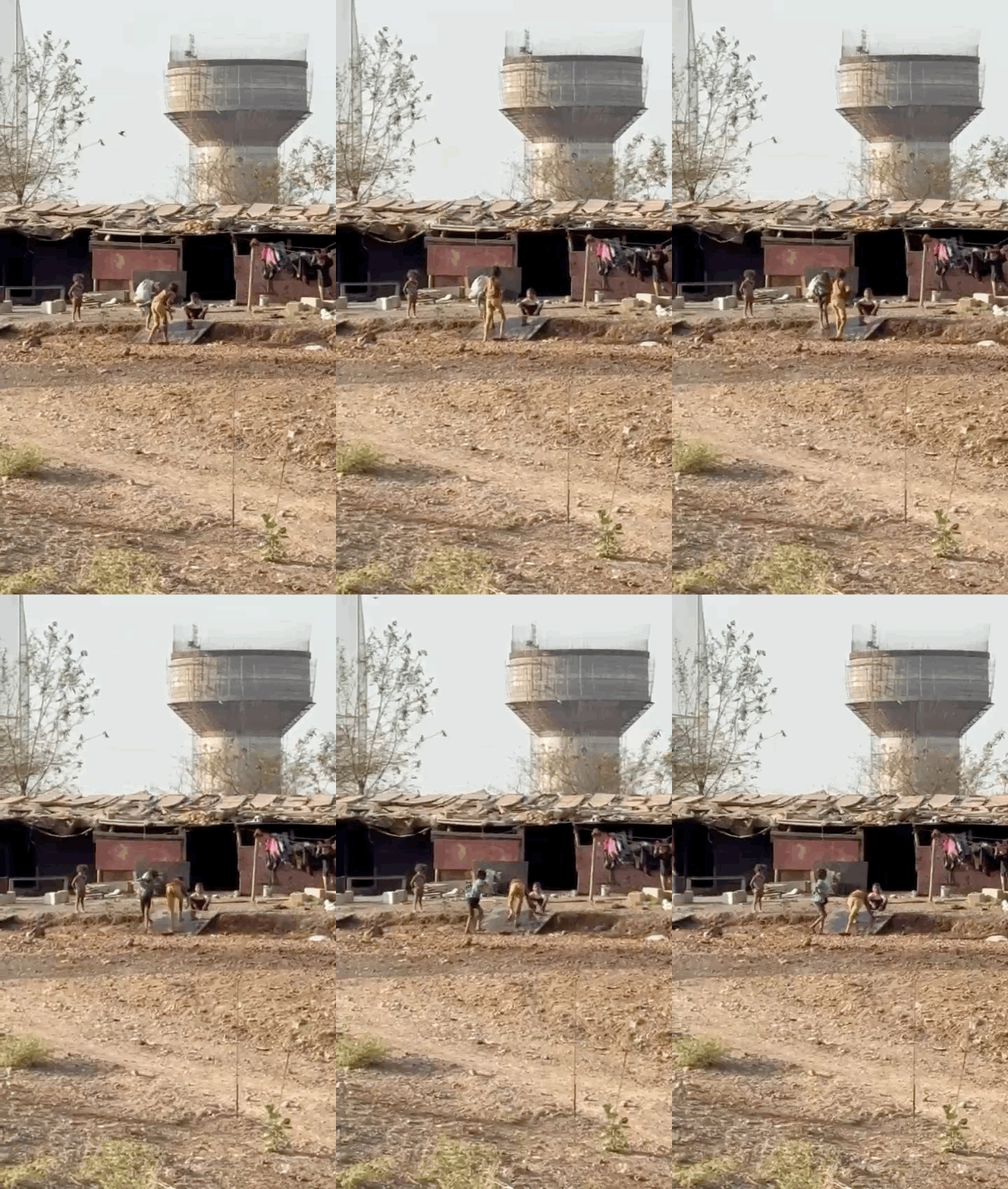
Every time we visit a construction site, we find children playing with the materials around them. There are no swings waiting for them, no bright plastic slides, no soft play corners. There is dust, cement, uneven ground, metal sheets, leftover planks, heat, shade, and open space. And still, somehow, there is play everywhere.
One scene has stayed with us. A group of children spot a plank lying somewhere in the loose landscape of the site. They gather around it. It is too heavy for one child to lift alone, so three or four children come together. One child lifts from one side, another adjusts their grip, someone watches the path ahead, someone else shifts their body to balance the weight. There are no formal instructions. No one appears to be directing the group. But slowly, the plank begins to move. They carry it across the site, adjusting as they go, reading the weight of the material and each other's bodies.
Then they look for a place to rest it. The plank has to sit at an angle. It cannot be too flat. It cannot be too steep. It needs to stay steady. The ground below needs to work. At one point, a child brings a mug of water and pours it over the plank. Maybe they are cleaning it. Maybe they are cooling the metal before sliding. The action is quick, ordinary, and careful.
Then the slide begins. Children climb up, slide down, jump across it, balance on it, and keep changing how they use it. Older children bring younger ones in. Toddlers are helped, held, guided, and invited into the game. The slide belongs to the group, and the group keeps making room.
We saw this scene not once, but across three different construction sites. Again and again, children found a plank, carried it together, placed it carefully, and turned the raw materials around them into play. The slide was not waiting for them. They made it.
What We Noticed
Play began before the slide existed
The search, lifting, carrying, placing, and preparing were already part of the play.
The group became the engine
No single child could do the work alone. The slide emerged through shared effort and coordination.
Risk was being negotiated
The children responded to weight, slope, heat, surface, steadiness, and landing.
Mixed ages expanded the play
Older children helped younger children enter and enjoy the experience.
Scarcity became abundance
With very few ready-made play materials, children created movement, collaboration, care, and joy.
Tagged Insights
Mixed ability groups act as a scaffold for learning
Older children helped younger children enter the play through care, modelling, and support.
Learning is iterative, not linear
The slide emerged through finding, placing, testing, adjusting, and using the material in different ways.
Within the learning process objects and the environment become co-learners
The plank, slope, ground, heat, water, and open space shaped what children could try and how the play unfolded.
Learning happens when the learner is in a playful state of mind
The activity was joyful, voluntary, absorbing, and full of serious problem-solving.
Learning can be evidenced in the process not (just) in the output
The richest learning appeared before anyone slid - in the coordination, decision-making, testing, and preparation.